Ernest “Smokey” Smith VC — Victoria Cross group and militaria
Second World War · Seaforth Highlanders of Canada · custody: regimental / family — demo · Companion: Story trail
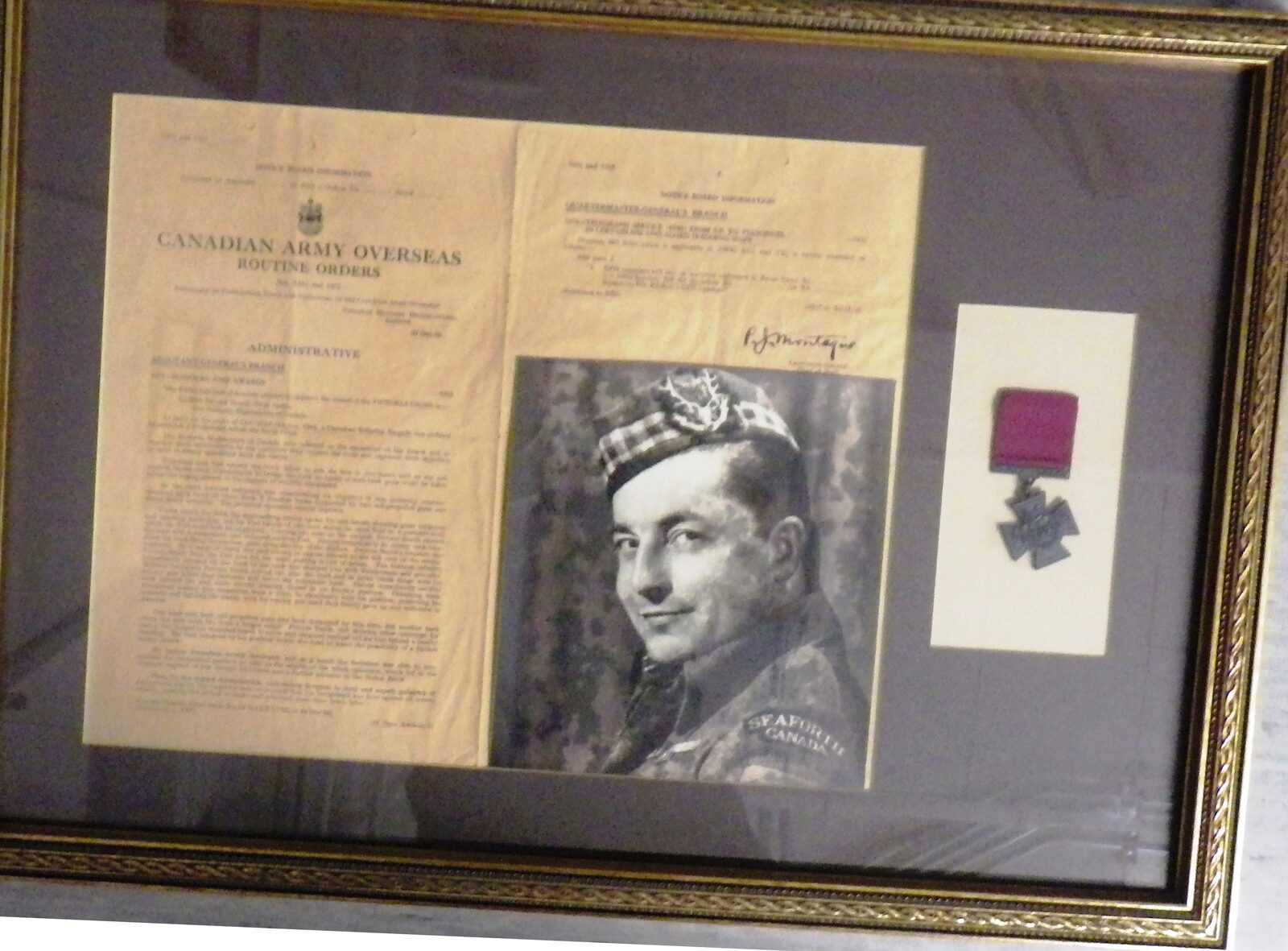
The documented shadowbox — the Canadian Army Overseas citation, Smith’s Seaforth Highlanders portrait, and the Cross · a supervised vault session photographs the naming engraving and hallmarks and closes the two open checks · all documents hashed into the report snapshot
Shadowbox · documentedvault session
vault session
vault session
to be digitised
vault session
Documentary disclosure: identity and custody are strong on named public records; material observation is scheduled, not yet performed. Transaction-suitable with that disclosure.
The checks · militaria profile · authority states shownSix checks, five sources — two held open, honestly.
| Check | Source · authority state | Result |
|---|---|---|
| Recipient named against the regimental record | Regimental catalogueAuthority-resolved | Match |
| VC award — citation and date | London Gazette · CAORO citationAuthority-resolved | Confirmed |
| Service and biographical record | Library and Archives Canada · Veterans AffairsAuthority-resolved | Match |
| Custody line — regimental / family | Custodian record · veradis networkAuthority-resolved | Documented |
| Naming engraving on the Cross | Supervised vault sessionMissing | Open |
| Title papers — digitised into the record | Custodian's documentsMissing | Open |
The path · what one supervised session unlocks
The person graph · Enrich
One person, many sources — each named. Every verified object the regiment adds corroborates the others. The record begins the day it is documented.
Report attestation
c4f1a90b7e2d6835a1c09f4e77b52d6e3a8c1904ff62d7b0e5a4c318d29b7e61verify.veradis.ai/r/PCS-CH-2026-0004 (demo)The veradis signature attests to data integrity, not authenticity. Documents are individually hashed into the snapshot. Hash-chained at the permalink.
Reproducibility. Re-running this method against this data snapshot reproduces this score to the digit. Falsifiability. This method returns Flagged, with the evidence, when an identity fails its checks. A verification that cannot say no would be worthless — this one can.
This Provenance Confidence Score is a probabilistic verification report based on digital data analysis cross-referenced against the veradis knowledge graph. It is intelligence, not insurance. It does not constitute a legal certificate of authentication, a guarantee against loss, or an indemnity against fraud. For high-value transactions, buyers should conduct physical inspection by a qualified specialist. veradis is not liable for financial loss resulting from reliance on this report.
How to read this report · terms, colours, and the ± number
PCS (Provenance Confidence Score). A 0–100 measure of how well today's evidence supports this object's claimed identity and history. It scores the evidence, not the object's worth — and it is intelligence, not a certificate.
The four components. Identity match (does the object match the claimed identity), Custody & story (is the chain of ownership documented), Material integrity (do the physical signatures check out), Risk profile (registries, sanctions, encumbrances). They combine at fixed, disclosed weights: 30% · 30% · 25% · 15%.
± 6 · the 95% credible interval. The honest range around the score: given today's evidence, the true score sits between 76 and 88 with 95% confidence. Checks that have not been run do not lower the score — they widen this range. New evidence always narrows it; it may or may not move the number in the middle.
Tier — Gold / Silver / Bronze. Assigned on the bottom of the interval, not the middle: Gold 80+, Silver 60+, Bronze 40+. We tier on what the evidence can defend. This report: lower bound 76 → Silver. A failed identity returns Flagged, with the evidence enclosed.
Coverage (4/10 views). How much of the category's capture protocol is on file — a separate axis from the score. Partial coverage is why this interval is wide — and why filling slots is the cheapest way to tighten it.
Authority states. Authority-resolved — the value was confirmed against a named independent source (maker production records, serial conventions) and earns full credit. Declared-only — stated in a record but not yet independently confirmed; half credit. Missing — not yet on file; no credit, wider interval.
Declared / Observed / Reference. What the record claims · what has actually been measured or photographed · the published benchmark it is compared against.
The colours. Deep green — supported by evidence on file. Brass — an honesty mark: a gap named, a component under 80, an action still open. Grey — unscored, unmeasured, or the Silver tier. Hollow dot — a check held open. Dashed border — exists but not yet on the platform (a pending capture, an off-platform document). Source dots: public registries · photography & documents · risk registries.
Snapshot & hash. Every version of this report is frozen as a data snapshot and fingerprinted (SHA-256); each version carries its predecessor's fingerprint, so the history cannot be silently rewritten. Verify any version at the permalink.