Appraise The step after Verify

Know what it's
worth.

You know it's real. But is it insured for the right number, priced to sell, or fair to split? Appraise builds an indicative range from real auction results, documented marketplace sales, and your own papers — every comparable named, every gap stated.

Real sales · named sources · a defensible range
Appraise report
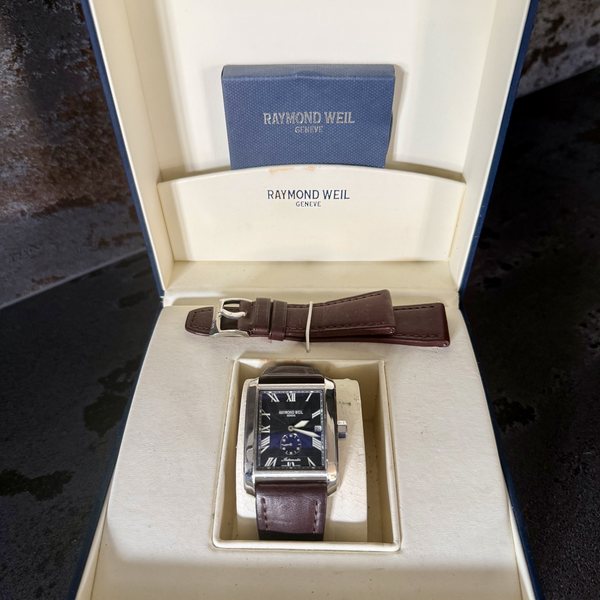
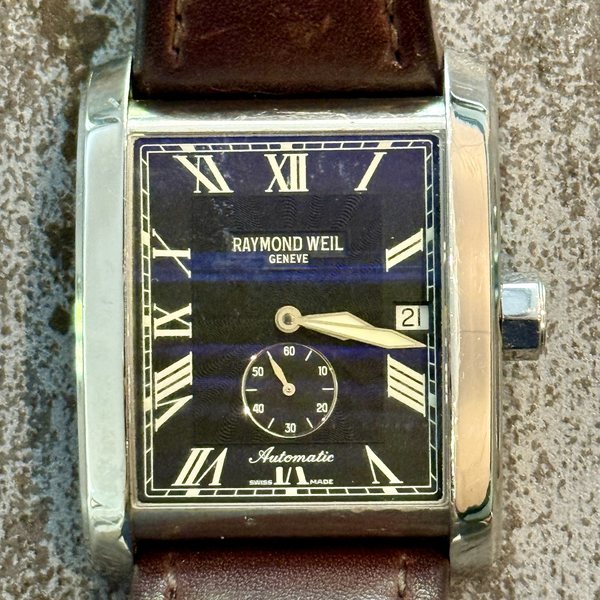
Raymond Weil · Don Giovanni
Ref 2875 · Serial V215160 · ETA 2895-2 · single owner since 1998
CHF 500–850indicative range
PCS 82 ± 6 · Silver · nine checks, three held open
  • Auction result · Waddington's, Toronto · same reference · June 2026
  • Marketplace sale · Chrono24, UK · box & papers · documented
  • Maker's catalogue · Raymond Weil · reference discontinued
  • Owner's record · original box · single custody since 1998
  • Service history · not on filegap named

An indicative range from documented sales — not a certified appraisal. Where the record has a gap, we say so.

This is a real object and a real report — open the Appraise report · the PCS report (printable PDF included)

Why people ask what it's worth

Curiosity, and the cost of the wrong number.

That’s what brings an object to Appraise. Four questions send people looking. The network answers all four.

Curiosity + value

“What have I actually got?”

Most things are worth more — or less — than you think. The number hides in the record.

The estate

“How do we divide it fairly?”

A collection split by guesswork splits the family too. A named range settles it.

The cover

“Is it insured for the right number?”

Underinsured until the claim — and then it’s too late to prove the value.

Stewardship + standing

“What are the crown jewels worth?”

A verified collection with no value is still a cost centre — until the number unlocks the grant.

Verify proves it. Appraise prices it. Together, the crown jewels become insurable, lendable, fundable.

The mechanics

Watch the band take shape.

A value range isn't plucked from the air. Five factors build it — each one moves the band, and you can see by how much.

Indicative range · CHF
0 500 1'000 1'500 2'000

The sources

Where the number comes from.

Verify names the maker's register and the movement spec. Appraise names the money — six kinds of pricing source, weighted by how real they are.

Public record

Auction results

Hammer prices from auction houses — regional and international. Public, dated, condition-described. The strongest evidence of what a buyer actually paid.

Market reference

Marketplace sales

Documented closings on category platforms — Chrono24 for watches, eBay sold listings, specialist dealers. Completed sales, not wishful asks.

Listing signal

Live listings & local boards

Current asks — dealers, Facebook Marketplace, classifieds. Useful as a signal of supply and interest, never the basis of the range on their own.

Primary maker

Maker's catalogue

The manufacturer's list price where the reference is current — the anchor for new and mint objects. Discontinued references are flagged as such, and the market takes over.

Owner's documents

Receipts, papers, custody

Original receipt, box and papers, service invoices, a documented chain of custody. The same object with its record sells for more — your documents move your band.

veradis network

Network records

Every report the network runs leaves a record — verified sales, appraised siblings, cross-references. Each report sharpens the next range.
Asking prices are guesses; the range is built on prices actually paid. Sold comparables are weighted first, listings are treated as signal, and every comparable in your report is named, dated, and linked.

Worked example

One watch, priced honestly.

A real object: a Raymond Weil Don Giovanni, Ref 2875, single owner since 1998, PCS 82 ± 6 · Silver. These are the actual comparables the market produced in the last eighteen months.

Comparable Source When Result
Don Giovanni Ref 2875 · steel, silver dial — same reference Waddington's auction · Toronto Jun 2026 USD 536 sold
Don Giovanni Ref 2875 · box & papers, two straps, very good Chrono24 private sale · UK Jan 2025 USD 884 sold
Don Giovanni Ref 2888 · sibling reference, beige dial Waddington's auction · Toronto Jun 2026 USD 1'785 sold
Don Giovanni Ref 4876 · sibling reference, black dial Waddington's auction · Toronto Jun 2026 USD 914 sold
Don Giovanni Ref 2888-STC · sibling reference, white dial Kaplans Auktioner · Stockholm Mar 2026 USD 571 sold
Don Giovanni line · maker's catalogue check Raymond Weil · current collections Jul 2026 discontinued

Sold results in native currency, as recorded by the source. Sibling references inform the band; only the same reference sets it.

The range
CHF 500–850

Floor from the June 2026 hammer price for the same reference. Ceiling from the documented UK sale with box and papers — which this watch matches, plus a single-owner chain since 1998. One gap holds the band down: no service record on file. The report says exactly that, and what to do about it. Open the full report →

Beyond the number

The report tells you what to do next.

A range is a snapshot. The report also shows how to raise it — and how warm the market is where you are.

  • File the original receiptA 1998 purchase receipt turns "declared origin" into documented origin — the custody score rises with it. Lifts the band
  • Service it, keep the invoiceThe one named gap on this watch. A maker-authorised service closes it and firms up the floor. Closes the gap
  • Photograph and log box & papersThe UK comparable with box and papers cleared well above the bare auction example. Complete sells better. Lifts the band
  • Keep the record currentEach verified event — a service, an insurance valuation, a transfer — writes to the object's record and travels with it. Protects value
  • Don't sell against an askLive listings for this family run far above sold prices. Pricing to asks costs months of no interest. Avoids the trap
Market interest · choose your geo

Don Giovanni · Europe

Examples from this family sold at Kaplans in Stockholm and two UK rooms in the last twelve months, and Europe is currently the largest hub for secondary watch sales. The model trades steadily: it sells, at honest prices, when the record is complete.

Interest bands are drawn from observed sale frequency and channel spread for the object's family, refreshed at report time.

Use cases

Why individuals and institutions ask what it’s worth.

Four reasons, each with a number attached. Sellers price to clear. Families settle fairly. Collectors insure for the right sum. Institutions turn a cost centre into a fundable asset.

Wealth, family
& resale

A number before
you sell

Price to an ask and it sits for months; price to real comparables and it clears. Appraise builds the range from sold results — the number a listing, a dealer, or a buyer starts from.

How a seller might describe it

“I listed at the number the record justified. It cleared in a week.”

For the seller
Estate
& inheritance

Settle the estate
fairly

A collection divided by guesswork divides the family too. A named, dated range — one each heir can see the evidence behind — turns a fight into a split.

How an executor might describe it

“Everyone saw the same numbers and the same sources. The estate closed without a row.”

For the family
Collectors
& insurers

Insure it for
the right sum

Underinsured until the claim; then the payout is a fraction. An indicative range, refreshed as the market moves, is the number an insurer will schedule against.

How a collector might describe it

“The schedule finally matches what the pieces are worth — not what I paid in 1998.”

For the collector
Museums, regiments
& foundations

Price the crown
jewels

A verified collection with no value is still a cost centre. Put a defensible number on the star objects and they become insurable, lendable, and fundable — the case a grant board and an insurer both need.

How a museum director might describe it

“The valuation turned our best objects from a liability on the books into the case for the grant.”

For the institution
Pricing

Pay for what's at stake.

A medal and a CHF 10'000 watch shouldn't cost the same to check. Start with the verdict. Add the number when the number matters.

Per-report prices in CHF and CAD. Choose your currency above.

Verify report
CHF 20 · CAD $35 EUR 21 · USD $22

Is it real? The Provenance Confidence Score with every source named. For the moment you need a verdict before you pay. See Verify →

Appraise report
CHF 40 · CAD $70 EUR 42 · USD $45

Real — worth what? Everything in the Verify report, plus the indicative range, the named comparables, the market-interest read, and the actions that raise the number. Every new photo or document after that is a CHF 5 re-run — it provably tightens the ±, and the version history keeps every step.

The collection
from CHF 150 per month

Hundreds of objects, one subscription. Agents keep the whole catalogue verified, enriched, and valued — continuously, not one-off. See Operate →

All reports are paid up-front through Stripe. The range is indicative — built from documented sales, not a certified appraisal. Where the network has too little sales data to defend a range, we say so and refund. We do not sell a guess.

Worth knowing.

Submit a photograph or a reference. The network verifies it's real, then builds the range from prices actually paid — every comparable named.

Appraise an object Verify CHF 20 · Appraise CHF 40 · Unscored is refunded