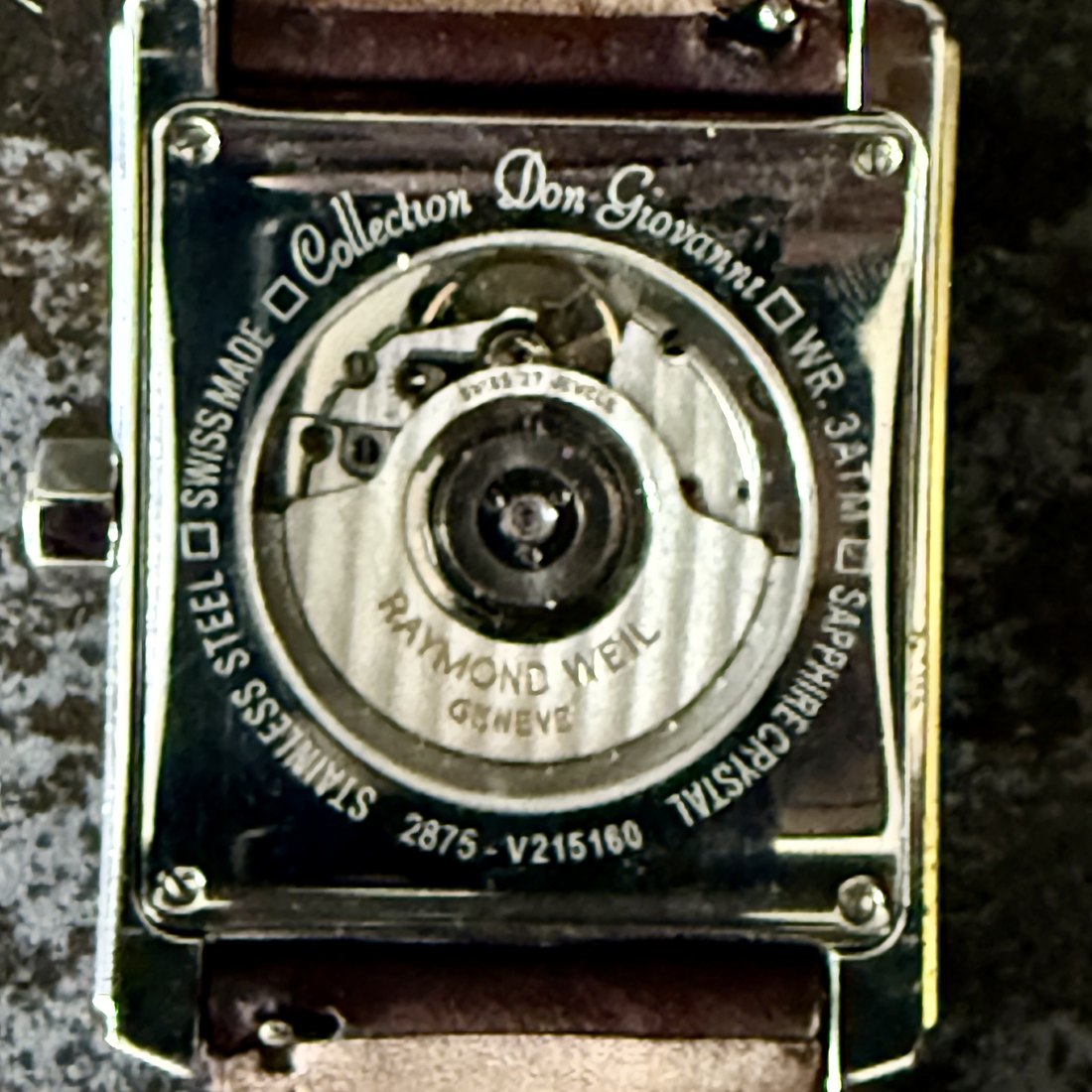
Check 1 of 4
The reference and serial check.
Raymond Weil catalogueReference 2875 · 28 fields
Serial V215160 is on file in the maker's catalogue against
Reference 2875. Identity matches declared origin.
Identity match
92
Check 2 of 4
The movement and material check.
ETA SA · Calibre 2895-2 specificationMovement · 14 fields
The ETA 2895-2 calibre — 27 jewels, small seconds at 6, date at 3,
42-hour reserve — is period-correct for the Don Giovanni line.
Case-back markings confirm stainless steel and sapphire crystal.
No replacement parts detected. Held at 78 on the
documentary-and-visual basis: six of ten capture views, and the
internal movement inspection that would firm it, are not yet on file.
Material integrity
78
Check 3 of 4
The sanctions check.
Reference 2875 Serial V215160 returns no record on the Watch Register.
No theft report, no sanctions flag, no disputed-ownership claim on file.
Risk profile clean. Capped at 90 while stolen-registry
coverage is partial — the cap is the method naming its own limit, not a
flag against the watch.
Risk-profile clean
90
Check 4 of 4
The chain-of-ownership check.
veradis network · cross-referencesCustody · 31 fields
Manufacturer extractNot issued — Raymond Weil has no archive service
Direct from manufacturer, 1998 — original ownership, no public auction record.
The 70 is structural: no Omega-style extract exists for Raymond Weil.
The gap is named, not papered over.
Custody continuity
70